RCD or MCB: which one tripped?
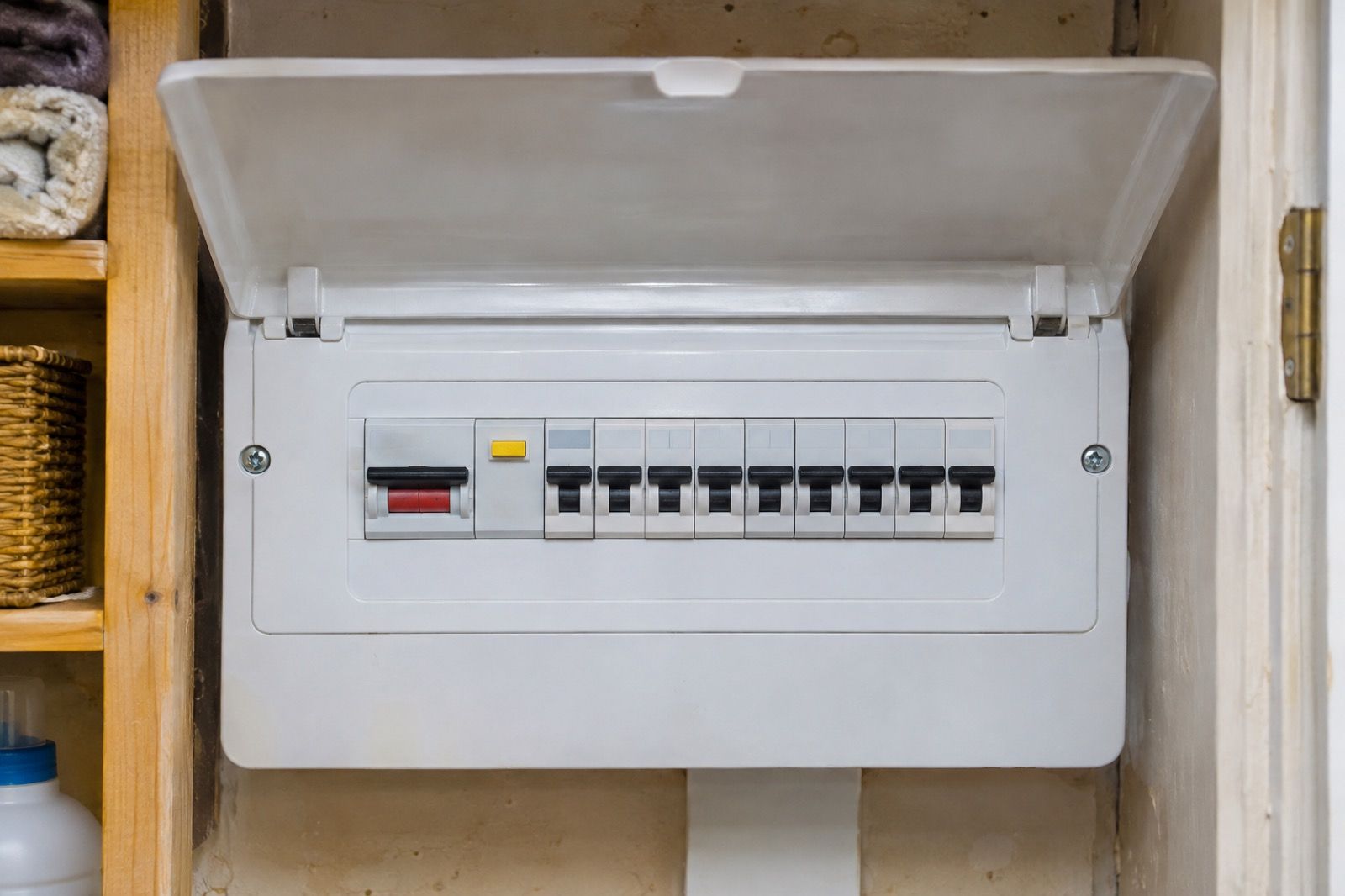
An RCD (residual current device) usually has a test button marked T and protects several circuits. When it trips, a group of circuits goes off together.
An MCB (miniature circuit breaker) protects one circuit against overload and short circuit. When it trips, only that circuit goes off.
Common causes of RCD tripping
- A faulty appliance, especially kettles, washing machines, dishwashers, ovens and immersion heaters.
- Water or damp in outdoor sockets, garden lighting or outbuilding supplies.
- Damaged cables, for example from a nail, screw or rodent.
- Deteriorating insulation in older wiring.
- Several appliances with small leakages adding up on one RCD.
How to find the cause safely
- Unplug every appliance on the affected circuits.
- Reset the RCD.
- If it stays on, plug appliances back in one at a time until it trips. That appliance is the likely fault.
- If it trips with everything unplugged, switch off all breakers, reset the RCD and switch breakers on one by one. The breaker that trips it identifies the faulty circuit.
- Leave that circuit off and call an electrician.
When to stop and call an electrician
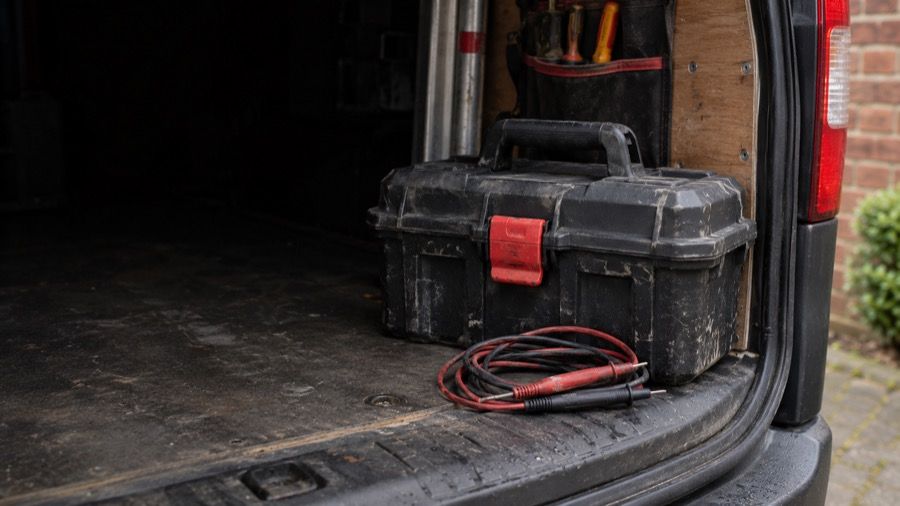
If the RCD trips with all appliances unplugged, the fault is in the fixed wiring. Fixed wiring faults need testing equipment to locate safely.
If tripping is accompanied by a burning smell, heat or scorch marks, switch off and treat it as an emergency.
Need help now?
If the steps above have not solved the problem, or anything feels unsafe, our circuit breaker & fuse box repairs service is available 24 hours a day. For anything dangerous, see our 24/7 emergency electrical repairs.