Why emergency lighting matters
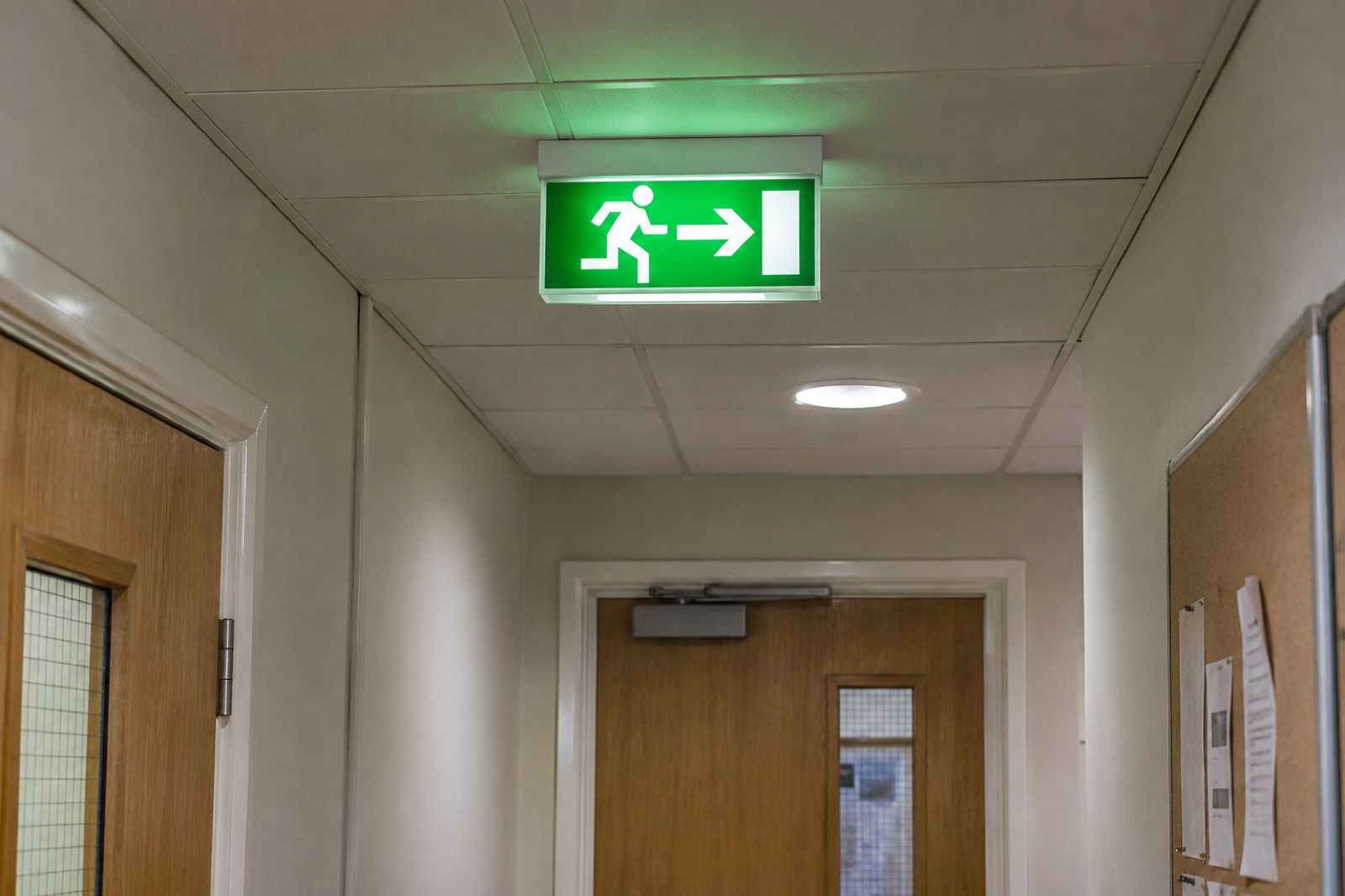
Emergency lighting switches on automatically when the normal supply fails, lighting escape routes, exits and exit signs so people can leave safely.
Business owners and landlords of shared buildings are responsible for keeping it working under UK fire safety law.
The monthly functional test
- Simulate a mains failure, usually with a test key switch.
- Walk the route and check every emergency luminaire and exit sign lights.
- Restore the supply and check charging indicators come back on.
- Record the result in the emergency lighting log book.
The annual full-duration test
Once a year each emergency light should run for its full rated duration, typically three hours, to prove the batteries still hold their charge.
Fittings that fail before the end of the test need new batteries or replacement.
Common emergency lighting faults
- Batteries that no longer last the rated duration.
- Failed LEDs or lamps in luminaires and exit signs.
- Charging indicators that are off, showing a supply or charger fault.
- Damaged fittings or missing diffusers.
Need help now?
If the steps above have not solved the problem, or anything feels unsafe, our emergency lighting & socket repairs service is available 24 hours a day. For anything dangerous, see our 24/7 emergency electrical repairs.